
Your next career move,
guided every step.
Detroit residents get an AI career counselor, a personalized pathway plan, funded training options near you, resume and interview help, and local jobs — all in one place, any time of day.
No cost. No sales calls. Built to connect you with relevant workforce resources.
Real labor data
Explore 800+ careers with real salaries
Pay, growth, and openings from the U.S. Bureau of Labor Statistics — localized to your region.
See top careers
Join to get answers from your AI counselor.
Three steps to your next move.
Tell us about you
A short intake: your goals, experience, schedule, and any barriers.
Get your plan
A pathway matched to local programs, employers, and funding in your region.
Take the next step
Enroll, apply, practice, and track progress with help along the way.
Everything you need to move forward.
24/7 AI career counselor
Ask anything — changing careers, childcare while you train, what to do after a layoff. Answers grounded in your local programs, in plain language.
Your personalized pathway plan
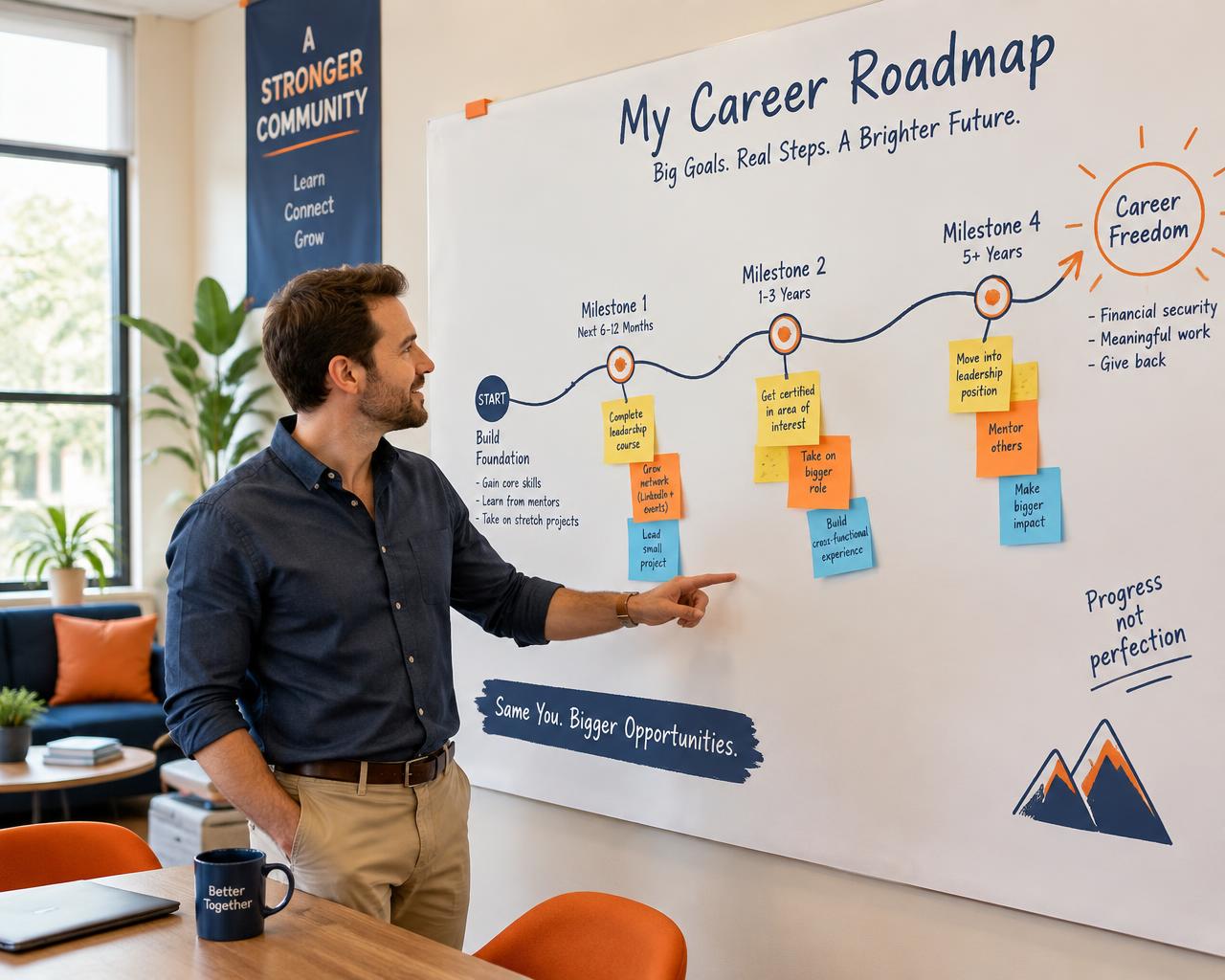
Tell us your goals and constraints once. Get a step-by-step plan with milestones, a realistic timeline, and the next action to take this week.
Funded training near you
See training providers and programs you qualify for locally, with the funding source that can cover the cost.
Resume builder
Turn your experience into a clean, employer-ready resume you can download as a PDF in minutes.
Interview prep coach
Practice real interview questions for the role you want and get instant, specific feedback.
Skills assessment
Identify transferable strengths, see the gaps for your target role, and get practical recommendations for what to learn next.
Local jobs & application tracker
Browse jobs posted by local employers, save them, and track every application from interested to offer.
Ready when you are.
Create an account in under a minute and get your first pathway plan the same day.
Create your accountThe advisor she couldn't afford, always in her pocket.
A laid-off plant worker on the east side exploring an EV technician credential at 10pm. A parent in Southwest Detroit weighing Michigan Reconnect options on a Sunday. Careerpath365 meets each of them the moment they show up — with a plan, a next step, and a career coach one escalation away.
- Multilingual conversation, natural language
- Contextual — knows the resident's plan and history
- Clean handoff to human case managers when needed
- Every interaction logged for continuity of care

Answers to the questions career seekers ask most.
Plain answers to the questions people search for most when figuring out their next career move — backed by real labor department data.
What career is right for me?
The right career sits at the overlap of what you're good at, what you enjoy, and what employers in your region actually pay for. Careerpath365 starts with a skills and personality assessment, then matches you to careers using real U.S. Bureau of Labor Statistics data on pay, growth, and openings — so the answer is based on evidence, not guesses.
How do I choose a career path?
A practical way to choose a career path: (1) assess your skills, interests, and personality; (2) compare careers on pay, growth, and the education each one requires; (3) pick a target and map the steps — training, certifications, and experience; (4) revisit the plan as you progress. Careerpath365 walks you through each step and builds a personalized plan you can adjust anytime.
Is there a career quiz or test that actually helps?
A good career assessment does more than a five-question quiz — it measures your skills across areas like math, technology, and working with people, plus personality traits like curiosity, organization, and calm under pressure, then connects the results to real job data. Careerpath365's assessment does exactly that and turns the results into a step-by-step career plan.
How do I change careers at 30, 40, or 50?
Changing careers later in life is common and very doable. The keys are: identify the skills you already have that transfer, choose a growing field with realistic entry requirements, fill skill gaps with short certificates or funded training rather than another degree, and rewrite your resume around transferable strengths. Careerpath365 builds a 6–12 month transition plan and points you to funded training programs in your region.
What job pays well without a four-year degree?
Many careers pay well without a bachelor's degree — skilled trades like electricians and HVAC technicians, health care roles like dental hygienists and LPNs, and IT support positions. Our Top Jobs page lists hundreds of careers with real Labor Department salary data, filterable by education level, so you can see exactly which jobs pay well with a certificate, associate degree, or apprenticeship.
How do I find training programs near me?
Careerpath365 maps funded training programs, community colleges, and career centers in each region it serves — including WIOA-funded options that can cover tuition for eligible residents. Choose your region from the menu, and the portal shows local programs with eligibility details and costs.
Can a career counselor be replaced by AI?
AI career guidance works best as a complement to human counselors, not a replacement. Careerpath365 handles the time-consuming parts — assessments, labor-market research, plan drafts, resume and interview prep — so human counselors and case managers can focus their time on the people who need them most. Agencies using the portal can serve three to four times more residents per counselor.
How do I know what job fits my skills and personality?
Start with a structured assessment that rates your skills and personality traits, then compare the careers it surfaces against real labor-market data: median pay, ten-year growth, and annual openings. Careerpath365 combines both — the assessment reveals your strengths, and the career explorer shows which matching careers are actually hiring in your region.
How do I write a resume that gets interviews?
A strong resume is one page, tailored to each job, and led by results rather than duties — 'served 40 customers a day' beats 'responsible for customer service.' Put your most relevant experience first, mirror the words in the job posting, and keep formatting simple so applicant tracking systems can read it. Careerpath365's resume builder creates a tailored draft from your background and the career you're targeting, and you can export it as a PDF.
How do I write a resume with no experience?
Focus on what you do have: coursework, volunteer work, caregiving, school projects, and transferable skills like reliability, communication, and teamwork. Use a skills-based format, write a short summary that names the role you want, and include any certifications — even short ones. Careerpath365 helps you identify your transferable skills and turns them into resume language employers recognize.
What should I put in a resume summary?
Two to three sentences that name the role you're targeting, your strongest relevant skill or achievement, and what you offer the employer. Skip generic phrases like 'hard worker' — be specific: 'Certified nursing assistant with 2 years of experience in long-term care, seeking a hospital CNA role.' Careerpath365 drafts a summary for you based on your assessment results and target career.
How do I prepare for a job interview?
Research the employer, practice answering common questions out loud, prepare three or four stories about your experience using the STAR method (situation, task, action, result), and plan questions to ask them. Careerpath365's interview prep lets you practice with questions tailored to your target career and gives feedback on your answers before the real thing.
What are the most common interview questions?
Expect: 'Tell me about yourself,' 'Why do you want this job?', 'What are your strengths and weaknesses?', 'Describe a challenge you overcame,' and 'Where do you see yourself in five years?' For strengths and weaknesses, pick a real strength with an example, and a real weakness you're actively improving — never a fake one like 'I work too hard.' Careerpath365's interview practice covers all of these with coaching on your specific answers.
What is an apprenticeship?
An apprenticeship is a paid job that includes structured training — you earn a wage from day one while learning a skilled trade like electrical work, plumbing, or HVAC, usually over 2–5 years, and finish with an industry-recognized credential. Unlike an internship, an apprenticeship is long-term, paid, and leads directly to a career. Careerpath365 lists local apprenticeships alongside training programs in your region.
Career support for every Detroiter.
Create an account in under a minute and get your first pathway plan the same day.